Tesche Ridge Blade X/RT Review

Introducing Tesche Tire USA

Tesche Tire is a Chinese company founded in Hong Kong in 2013, with additional development, manufacturing, testing, distribution, and marketing offices in California, USA, and Bangkok, Thailand. In early 2025, Tesche (pronounced tesh) started importing tires into the USA, establishing distributor and dealer networks with the goal of becoming a high-quality yet budget-priced brand in the competitive American market. Tesche has a few light-truck designs for the Turbo Diesel Register audience, including the tread that caught my eye at the 2024 SEMA Show.

Ridge Blade X/RT

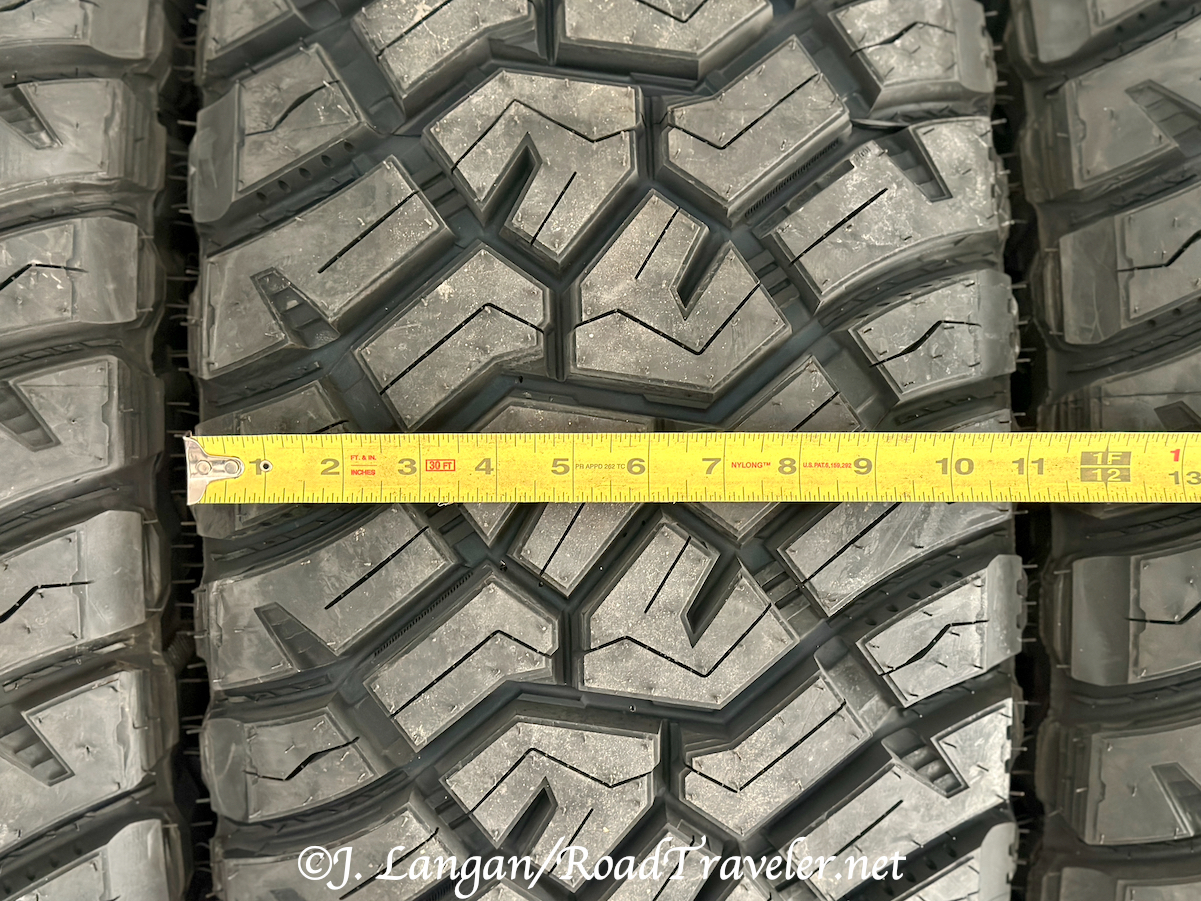
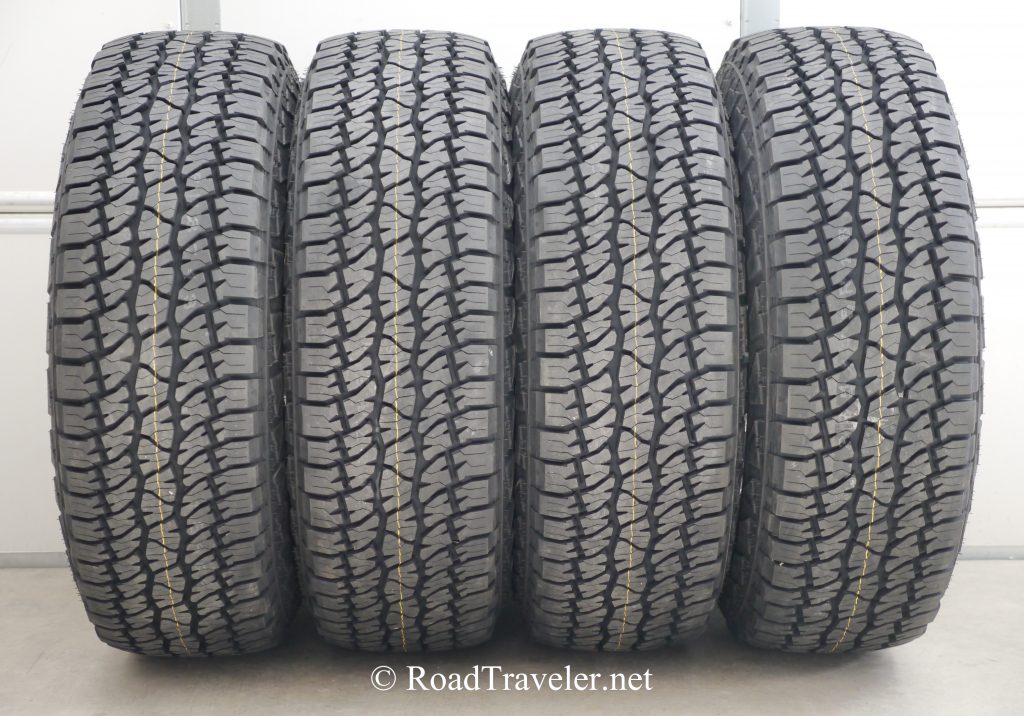
The Tesche Ridge Blade X/RT (Extreme Rugged Terrain) is a high-void, four-rib tire advertised as designed and engineered in the USA, made in Thailand. Like most similar designs, the upper sidewall has thick tread for additional traction and to prevent punctures. One side has raised black lettering with an inset tread pattern, the other has thick, solid raised black letters. They have 3-ply sidewalls and many of the blocks are linked to prevent tread squirm and reduce wear. There are stone and mud ejectors, a little siping, and some lugs are conveniently marked with 75%, 50%, and 25% to show the tread depth remaining.  
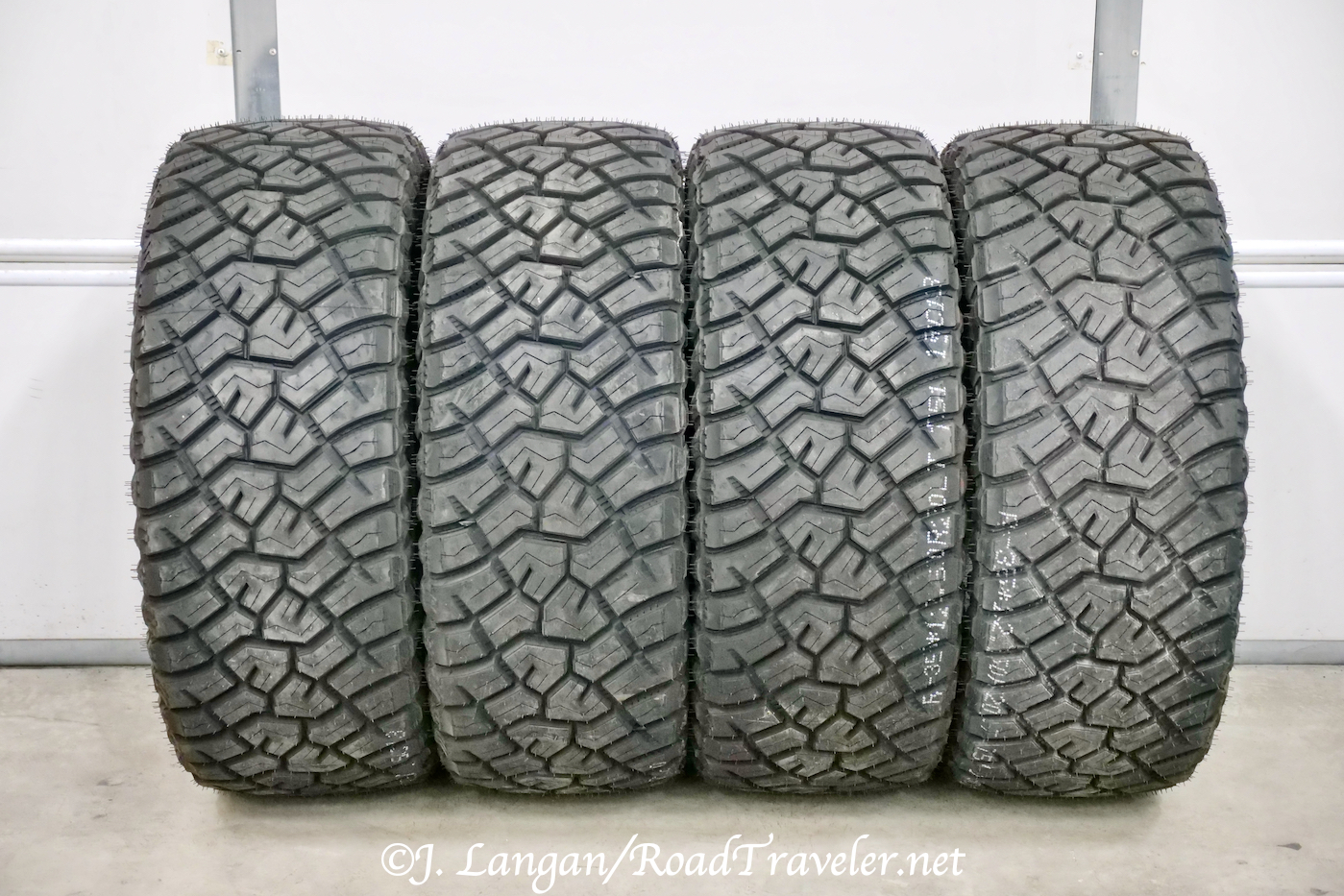
Tesche Ridge Blade X/RT 35X12.50R20LT.
Mud and stone ejectors, stepped tread blocks, and bars linking the lugs are premium features included on the Tesche X/RT.
75%, 50%, and 25% tread depths are modeled into a few lugs.

Why A Rugged Terrain

Whether you call them rugged terrains (the newest, most popular moniker), a commercial traction, aggressive all-terrain, or hybrid design, any relatively high-void and stoutly-constructed traction tire that’s quieter than a mudder probably qualifies. Think bigger tread blocks and more space between the lugs than the ever-popular BF Goodrich All-Terrain. Of course, there are always trade-offs. Rugged terrains will be louder than highway or all-seasons, potentially have a rougher ride because of their heavy-duty construction and/or larger lugs slapping the tarmac, and generally won’t last as long.

Sizes And Specifications

Tesche’s brochure offers dozens of X/RT sizes for wheels from 15 inches all the way up to 28 inches in diameter. The majority are for the most popular 17-inch, 18-inch, and 20-inch sizes, and all are listed as having 18/32-inch of tread (keep reading). From the limited options available from the initial shipping containers hitting the Southern California docks in early 2025, I chose the 35X12.50R20LT for this evaluation. 

In this 35-inch size, the X/RT is 34.57-inches tall, 12.28-inches wide, with the aforementioned 18/32-inch depth, while touting a load-range-F, 12-ply rating. Light-truck load-range-F tires in this size should have a load index of 125 and be rated to handle 3,640 pounds at 80 psi. However, based on the sidewalls the set I received only have a 121 load index, which according to Tire and Rim Association standards are rated for just 3,195 pounds at 80 psi. 

34.6-inches tall.
Tread width is about 11-inches, overall/section width is 12.3-inches.

When I asked Tesche about these inconsistencies they assured me that these made-in-Thailand X/RT actually meet the load-range-F specifications, and the discrepancies were due to importation and tariff challenges. It is possible that many consumers would not catch this, or may not care when buying less expensive rubber. However, I informed them that some enthusiast definitely would care, and that all the published ratings and sidewall data should be consistent and accurate. 

Load index of 121 and maximum capacity of 3,195-pounds at 80 psi are not correct for load range F, 12-ply, 35×12.50R20 tires.

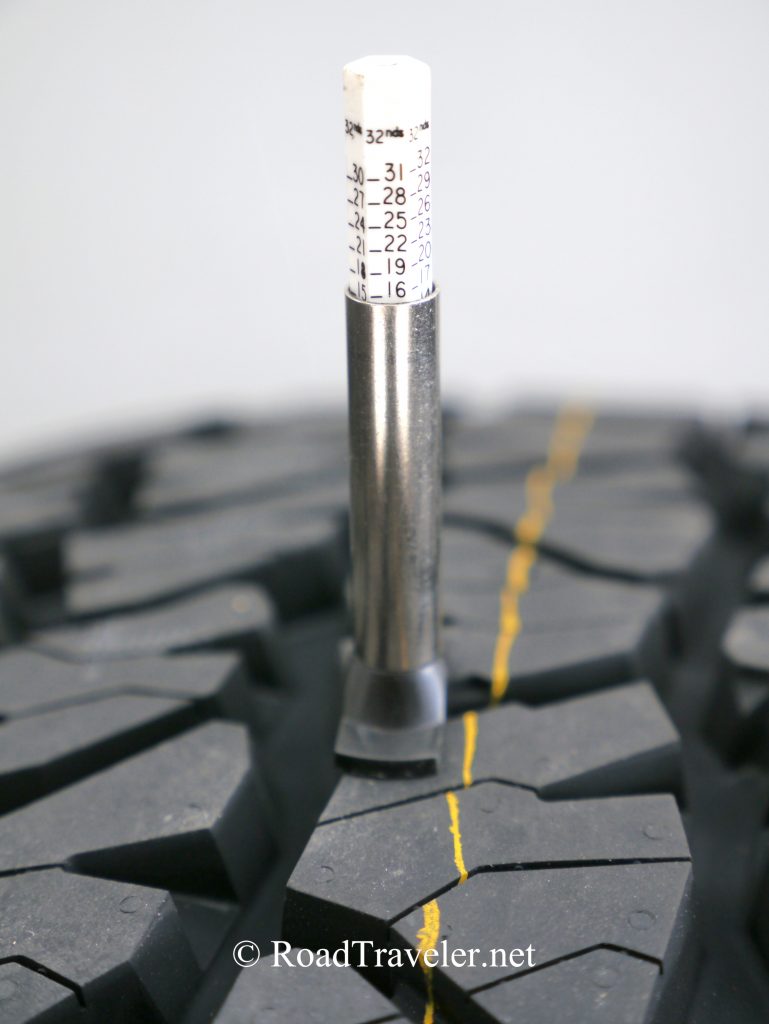
Additionally, although the tread depth is listed as 18/32”, I measured approximately 17.5/32”. Tesche stated the advertised depth was a conversion from 14 mm, approximately 17.5/32”, and they rounded up to 18/32”. My suggestion was that they be as precise as possible, and gave them an example of a specific Toyo C/T size that has an advertised depth of 18.4/32”, which is accurate. Tesche deserves much credit and respect for being genuinely receptive to my input and critique. 

Tread depth measured approximately 17.5/32” (14mm) when new, not the published 18/32”.

Siping depth is quite shallow, about 6/32”, which means that when the tread has worn down to about 11/32” the siping will disappear. Plenty of designs do not have full-depth siping, or any siping at all if they are a high-void mudder. However, many rugged terrains do have much deeper sipes, which is generally preferred because the additional gripping edges can significantly increase traction on slippery surfaces. The location, depth, or shape of sipes can increase the odds of rubber being cut or torn more easily, so as always there are tradeoffs. 

Sipes are only 6/32” deep.

To round out my constructive criticism, like other overseas companies Tesche’s promotional material translations leave much to be desired. Their slogans, naming, and phrasing makes for interesting reading. These criticisms aside, I do like the Ridge Blade X/RT, their quality and overall performance has been impressive… dare I say as good as most known brands! 

Sidebar – Less Expensive Offshore Tires Found At SEMA

In addition to the numerous mainstream tire companies familiar to enthusiasts, there are always a plethora of unknown overseas manufacturers at the SEMA Show. Many offer huge commercial, agricultural, or mining application products, but there are plenty with light-truck offerings as well. 

There are always a few interesting tread patterns that catch my eye, some are blatant copies, but others are different and interesting, and one would think it would be easy for a journalist to strike up a conversation to potentially source a set for an article. However, my experience has been exactly the opposite.  

Either there is such a language barrier that just initiating a conversation is a significant hurdle, or the company is not really trying to have their products reviewed for the North American consumer market. That may sound strange but SEMA is less about journalists and more about potential importers and buyers. When I walked up to the Tesche booth they became the first enthusiastically engaging offshore tire manufacturer I have spoken with.  

Will, a Chinese gentleman with a good command of English, was excited when I showed him a copy of my Still Plays With Trucks column in Turbo Diesel Register 126, which contained a detailed evaluation of the LT255/85R17 Mickey Thompson Baja A/T. He said “that is exactly the type of review we want”, as they were just preparing to enter the US market in 2025. Tesche promised me a set as soon as they hit the Southern California docks, and they followed through in January 2025. 

—————–

Snag Getting Them Mounted

Most 12.5-inch-wide flotation sizes are supposed to be mounted on rims that are at least 8.5-inches wide, so stock 8-inch wheels are technically too narrow. Tesche lists the X/RT in a 35×11.50R20 that I would have preferred, and also would fit perfectly on an 8-inch rim, but they were not yet available. Buying new wheels solely for this evaluation was a deal-breaker, so just like for previous articles I chose to squeeze them onto a set of 8-inch-wide OEM rims. 

Many shops won’t notice rims that are a little too narrow, or they might not care. However, Discount Tire is a stickler and refused to mount and balance the 35×12.50R20 on 8-inch rims. Another store just down the street didn’t balk, and there was a silver lining to this minor hurdle. 
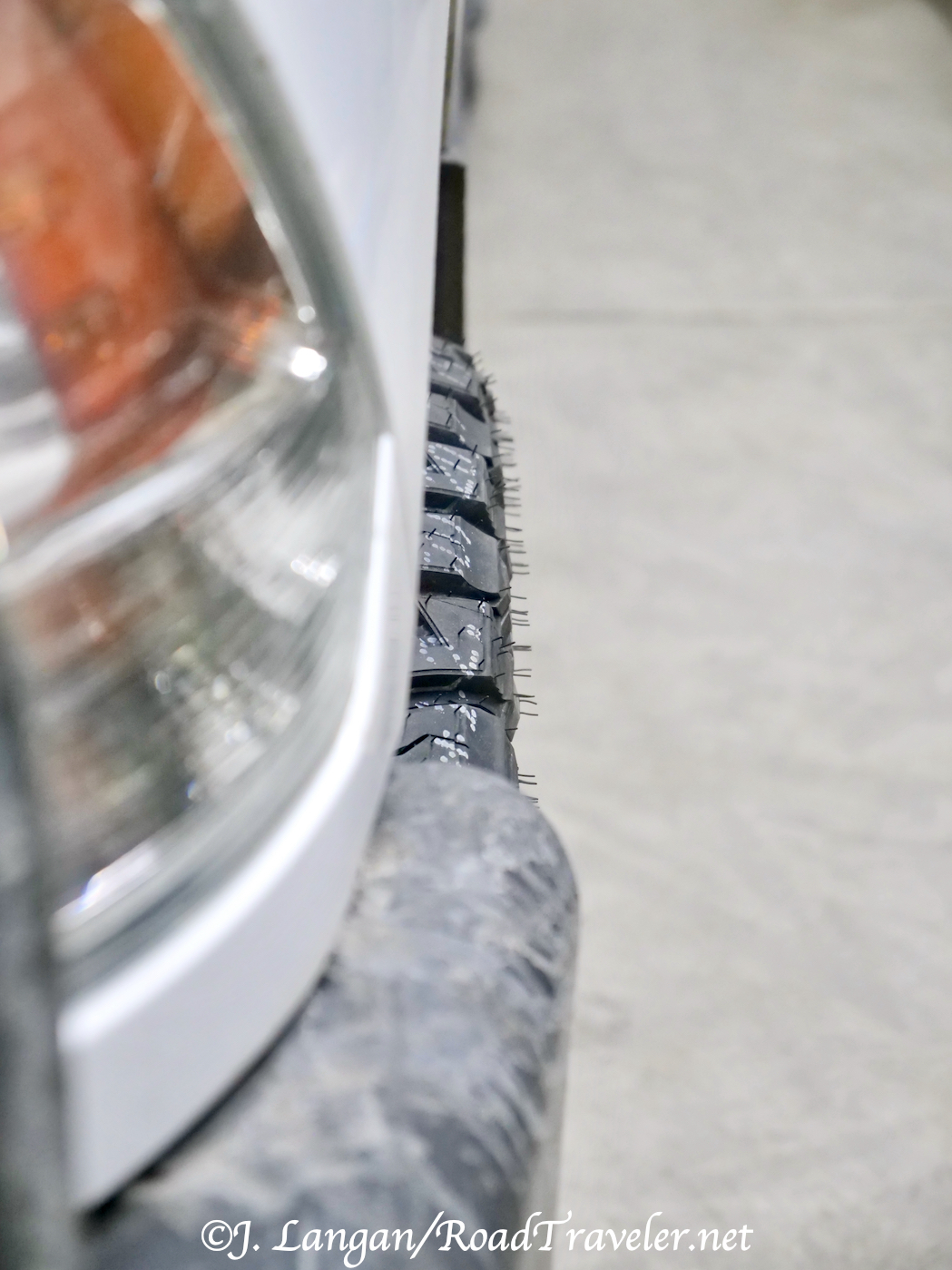
Mounted on narrow 8-inch-wide wide OEM wheels with lots of backspacing, a fairly wide 12.5-inch-wide tire doesn’t stick out too far. Here they are just barely covered in the front by the Buckstop bumper, and in the rear by Mopar mudflaps.

This shop was not willing to use the static, single plane balancing method that I generally prefer, which puts less weight on the wheels. For 35-inch and taller rubber they insist on using the dynamic, dual plane method (they are likely trying to avoid customer complaints and comebacks). Dynamic balancing is theoretically the best method because it corrects for both vertical and horizontal imbalances, but if done poorly an excessive amount of weight can be added. Dynamically balancing the X/RT showed how impressively little weight was needed; the quality and trueness of this set might not have been so obvious if static balancing had been used. Unfortunately, I was not able to get the road force information, which can be another helpful metric of overall quality. However, my on-truck assessment of my set of Tesche X/RT tells me they do not have excessive road force. 

Impressive Balancing Results

When it comes to balancing a tire mounted on a wheel, often it’s the wheel that is more out of balance than the tire, so much of the weight needed is because of the wheel. Larger rims are heavier, and therefore often require more weight than a smaller rims. 

The 67-pound X/RT tires were mounted on 40-pound OEM aluminum Ram 20″ wheels. All four required minimal weight to balance, the most being just 5.25 ounces. The average for all four 107-pound assemblies was 4.4 ounces; impressive! This caused me to question if the technician had balanced them properly, but my concern disappeared after rolling down the highway at speed.

Tire Number, Weight Outer, Weight Inner

#1)  4.5 oz. / None 

#2)  2.75 oz. / 1.00 oz. 

#3)  3.50 oz. / 0.75 oz. 

#4)  4.25 oz. / 1.00 oz. 

35X12.50R20LT Tesche Ridge Blade X/RT mounted on 20” Ram OEM aluminum wheels weigh 107 pounds.
Impressively little weight was needed to dynamically balance the Ridge Blade X/RT tires!

Tracking And Handling

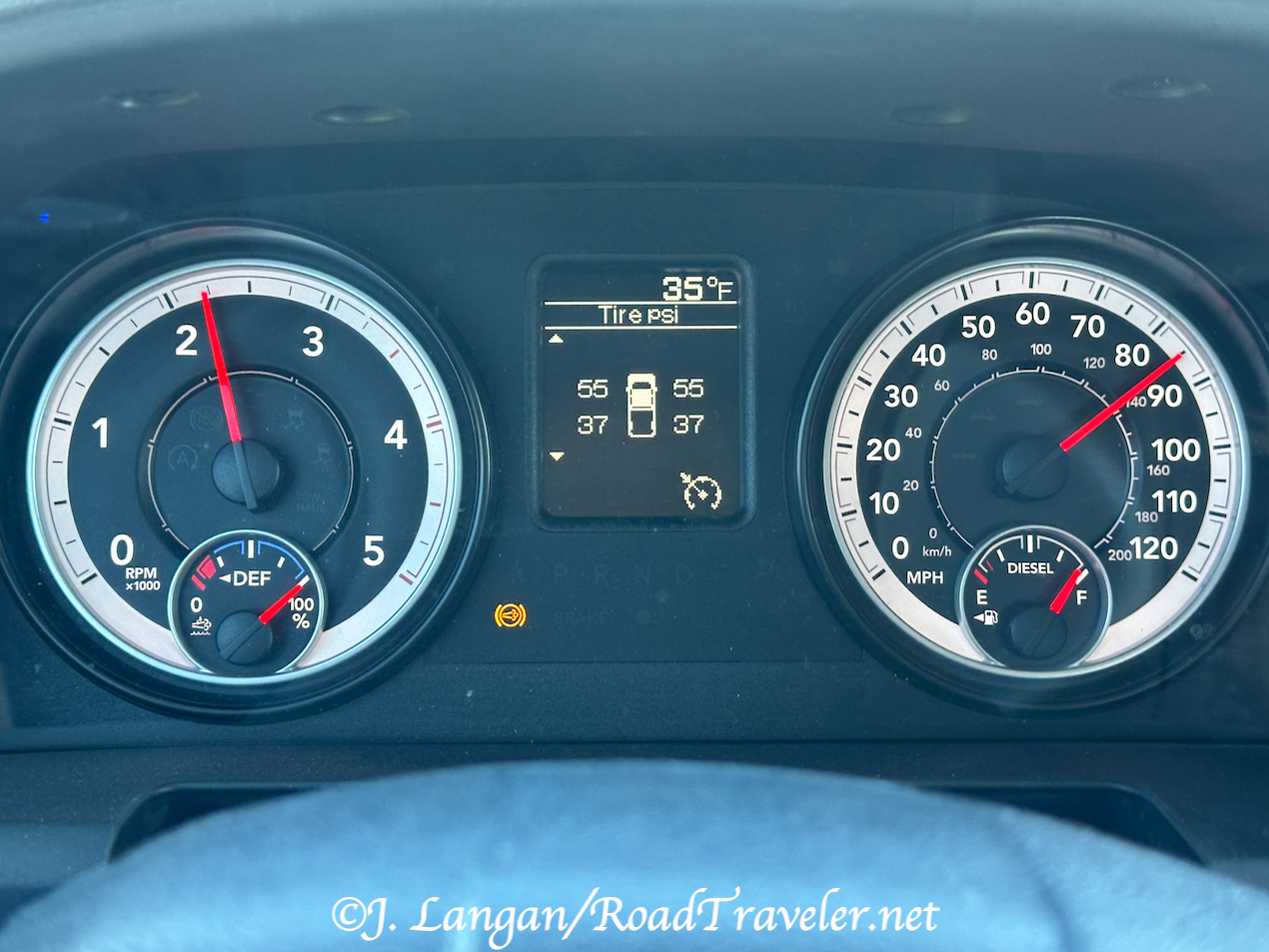
With 55 psi in the fronts and 35 psi in the rears steering response was good and there was noticeably less body roll. Ride quality was slightly firmer than the bigger tires I removed due to the 0.8-inch shorter diameter. (For a given tire diameter, taller wheels yield shorter sidewalls, which reduces sidewall flex, roll, and typically improves responsiveness at the expense of a firmer ride.) Centramatic balancers certainly help, but the X/RT were obviously balanced well, as they remained smooth well above the limit on Interstate 80 in rural Nevada. 

Straight line tracking and stability can be greatly affected by the surface, road crown, vehicle alignment settings, and modifications. That disclaimer aside, tracking with the X/RT was phenomenal on my 2014 Ram.  My preferred baseline standard is to have at least several seconds (6 – 10) of look mom no hands driving on a smooth, flat, and straight roadway before needing to steer my drifting truck back to the center of my lane. The Ridge Blade easily surpassed that standard multiple times, including one run that lasted 25 seconds!

Nice looking sidewall with raised black letters, with a massive Centramatic Wheel Balancer that just fits behind the big 20” wheel. Smaller balancers are needed for smaller wheels.
Smooth at an indicated 85 mph. If you think those pressures are too low for an unloaded pickup, please consult the Tire And Rim Association load inflation charts.

Overall Traction And Performance

Like all the tires I evaluate, the X/RT saw lots fast freeway driving, local commuting, a decent amount of snow/slush, very little mud (winter slush can be similar, and they cleaned themselves appropriately), hundreds of fast and slow 4WD off-pavement miles, and a bit of light trailer towing. They seemed to perform well on all surfaces and I never felt they lacked grip or were sub par. All designs will pickup rocks when off-pavement, the size of which directly correlates to the space between the lugs and the road surface, usually throwing them once back on-pavement at highway speeds. The Ridge Blade X/RT didn’t seem to pickup, hold, or throw as many stones as some competitors. Surprisingly, I could not find any cutting, chipping, or tearing of the tread or sidewalls from the off-road driving. 
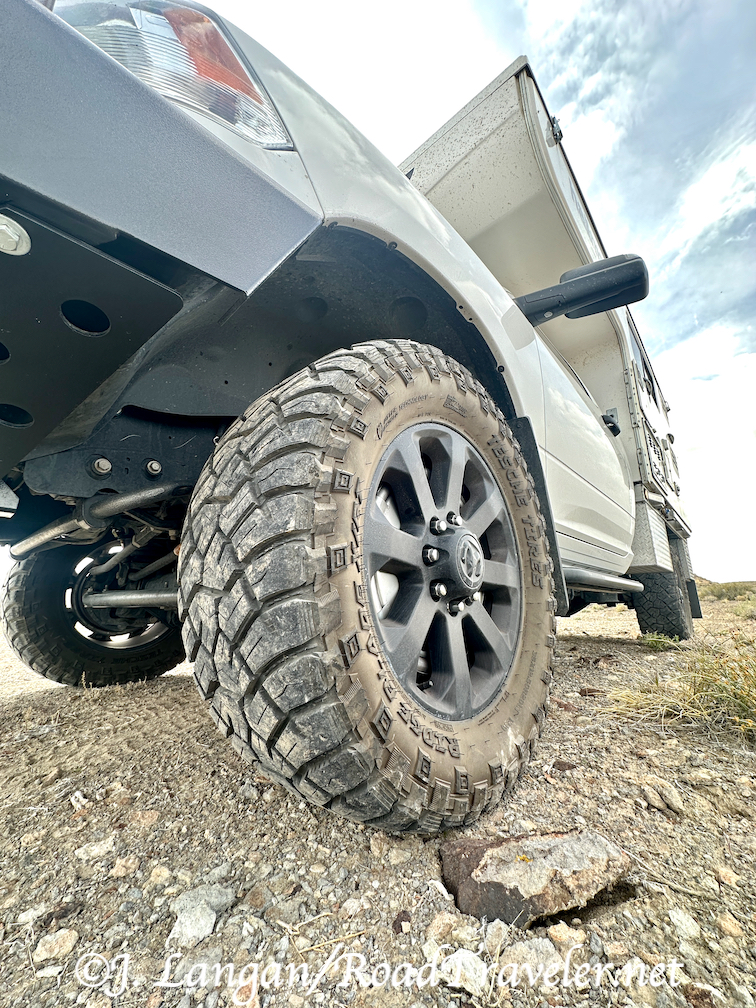
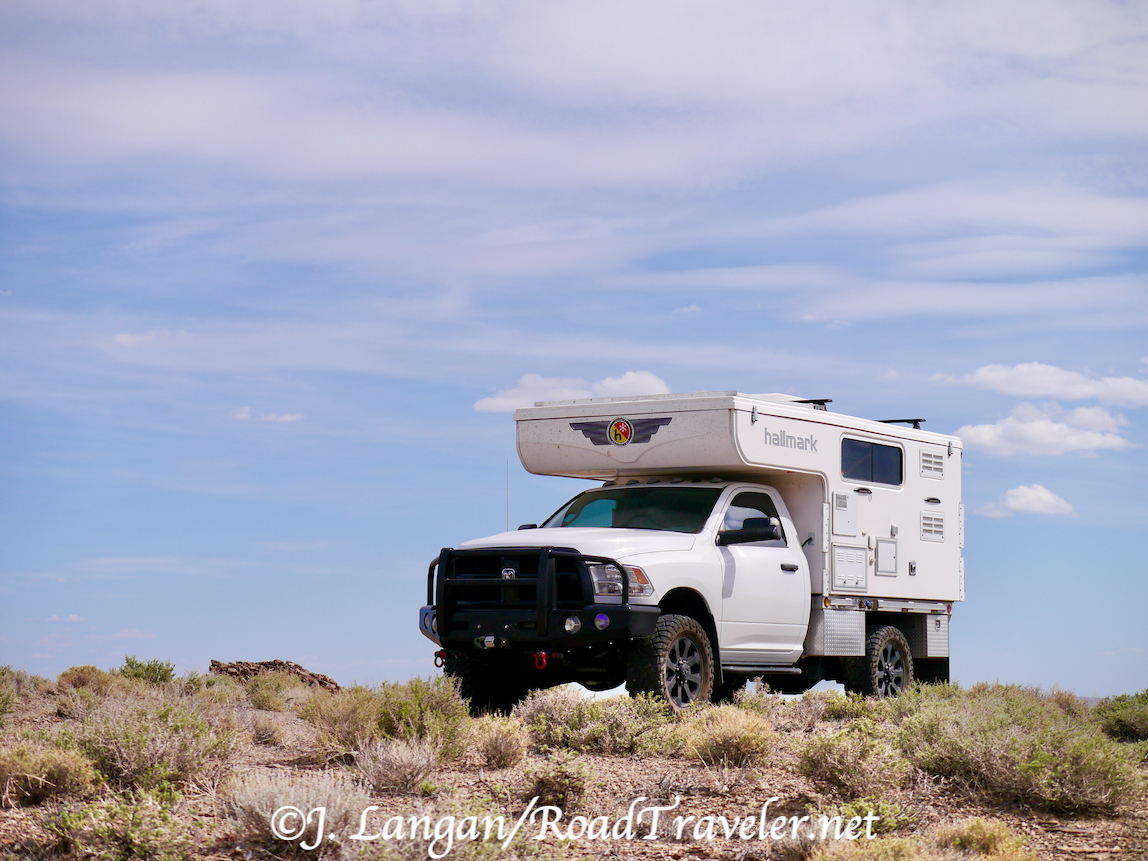
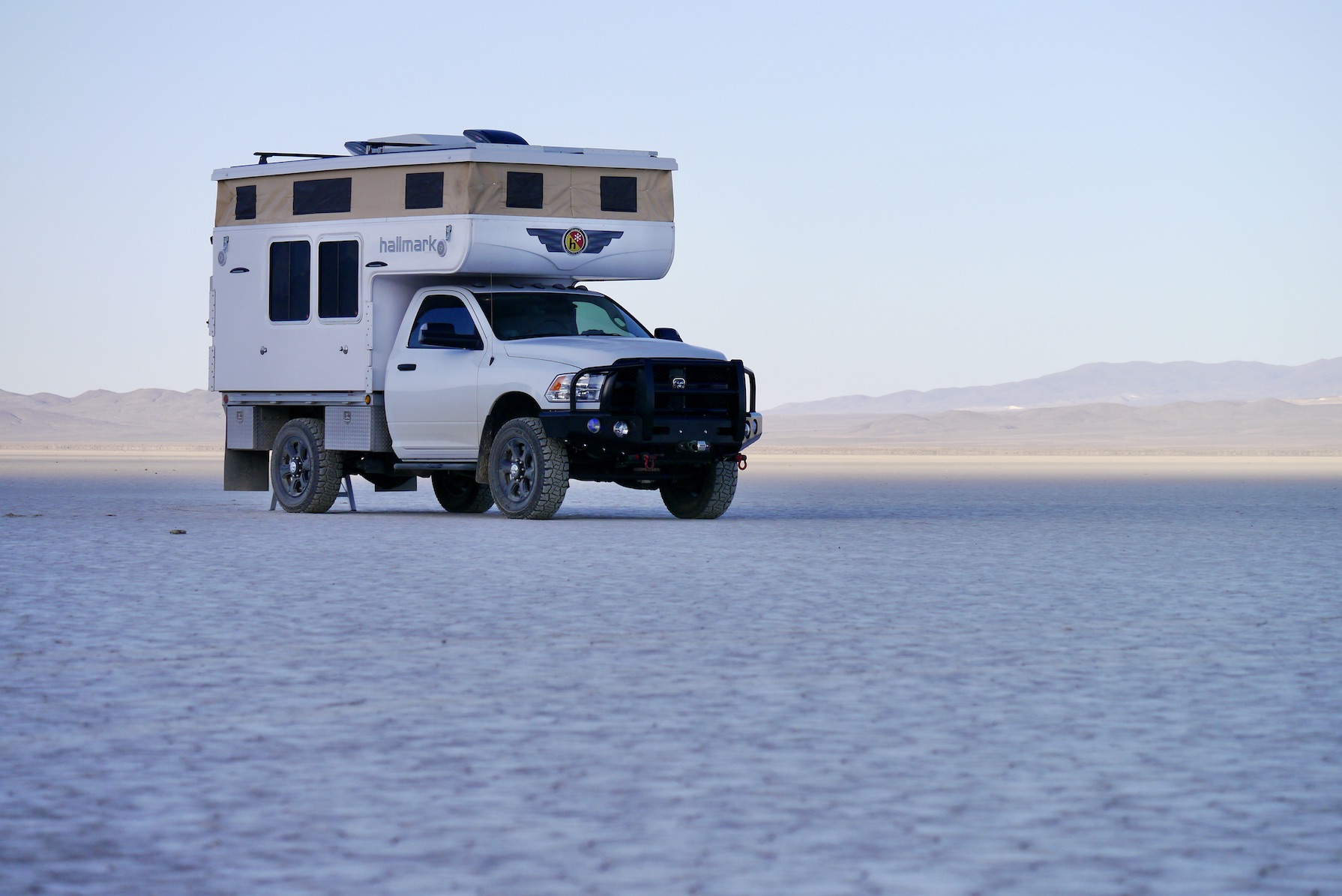
Tesche X/RT in some rugged terrain, under my 2017 Ram with Hallmark flatbed camper, plus much armor, tools, and accessories, with a gross weight of 12,000 pounds.
The X/RT didn’t seem to hold or throw quite as many pebbles as some similar designs, but picking up rocks off-pavement is inevitable.

Wear Data

In January 2025, the Ridge Blade X/RT were mounted on my 2014 crew cab 2500, and after two rotations I had quickly logged 5,000 miles. They were performing so well and consistently under that heavily-armored (9,000-lb. wet/empty), manual transmission Cummins Turbo Diesel, that I decided to give them a chance to prove themselves working even harder during a spring road trip under my 2017 regular cab with Hallmark flatbed camper. 

This added another 1,850 miles under that RV, which typically has about 5,500-pounds on the front axle and 6,500-pounds on the rear. The X/RT performed just as well under the camper as on my crew cab. After that trip they were swapped back onto the 2014 to reach 7,000 miles of total use. 

Quality aftermarket tires on my trucks often yield approximately 2,000 to 2,200 miles for each thirty-second of rubber, so better than that is noteworthy. Accurately measuring down to 1/32” can be challenging, however, two gauges indicated the X/RT were down just 2.5/32”. That equals an exceptional 2,800 miles per 1/32” of tread! Not the best I have ever seen, but close and definitely outstanding. 

Even if I am pessimistic and say that my measurements are off by 0.5/32” (1/64”), and they wore 3/32”, that would be 2,300 miles per 1/32”, and still above average. 
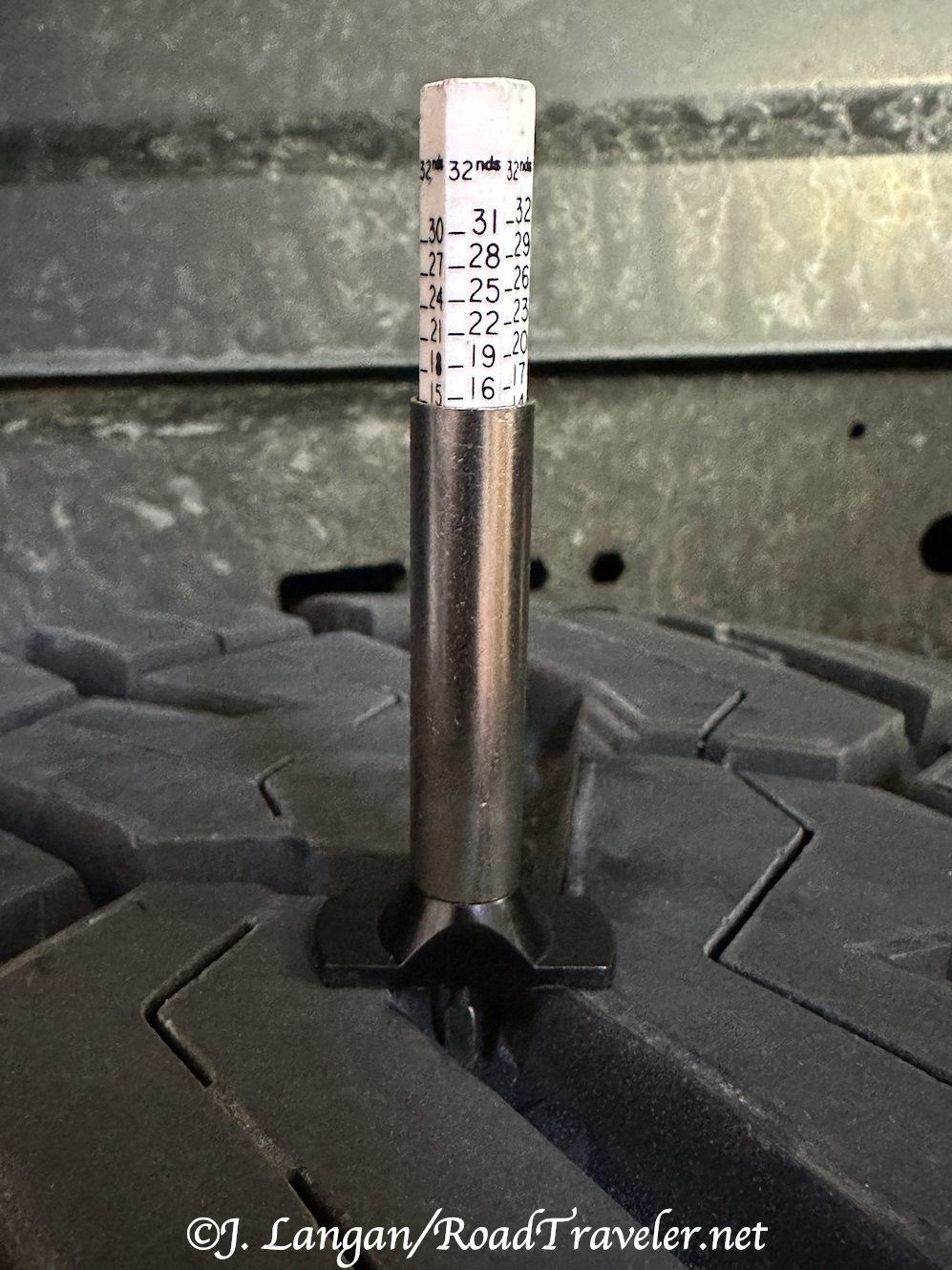
Showing little wear during a rotation.

Sidebar-Tire Reviews Will Always Be Popular

Why are tires such a popular topic for both enthusiasts and regular consumers, maybe more popular than oil? From my perspective the answer is simple, and like most things it boils down to our wallets. Although modern tires are generally well-made, high-quality, a good value, and can last much longer than designs from 30 to 50 years ago, they are still a fairly expensive recurring maintenance cost. How about a real-world comparison? 

Changing the engine oil in a modern Cummins Turbo Diesel at the maximum recommended 15,000-mile interval should cost about $100 for the filter and three gallons of premium oil if we do it ourselves. Do that three times to cover 45,000 miles and we’ve spent $300. Let’s use that same 45,000 miles as a theoretical average for putting new rubber on a heavy-duty pickup. 

Depending on the size, manufacturer, and retailer, many modern pickup tires can cost approximately $300 each, including the stock LT275/70R18E. Four at $300, plus balancing (mounting is generally included), and my local 8.26% sales tax would total $1,400. That’s 4.6 times more than the cost of oil changes to cover the same 45,000 miles. (This reinforces the mantra that oil is in fact relatively inexpensive, and that we should change it at optimal intervals, without being penny wise and pound foolish.) Fourteen-hundred dollars is an expenditure that requires consideration, and if you like taller sizes (tires or wheels) you will likely pay much more. 

Just before my article deadline my friend Tony from Colorado called for a new rubber recommendation, commenting that “tires are a much bigger investment these days”. In 2017, Tony and I trekked up to the Canadian Arctic to drive the infamous ice road before the new year-round replacement was completed. Before that Arctic adventure Tony had purchased a set of Toyo C/T based on my recommendation. Our conversation was long, detailed, and multifaceted, and he was extremely close to choosing the C/T again. That was until I added that the Yokohama Geolander A/T XD I had bought recently appeared to have similar traction and wear characteristics to the C/T, while being slightly quieter at higher freeway speeds. Less road noise was appealing so Tony decided to try the A/T XD, and he is happy with that decision. 

——————- 

How Much Road Noise?

Evaluated through my ears inside my Fourth Generation Tradesman, the noise was about what you’d expect when you look at the fairly aggressive design. The X/RT is not the quietest in the segment — that title currently goes to the Mickey Thompson Baja Boss A/T, which does have a tighter tread pattern — nor is the X/RT likely the loudest. 

In back-to-back testing over the same roadways the Tesche X/RT have a similar overall volume to the Toyo C/T (still love and have a set), or the Cooper Discoverer S/T MAXX (run them on our 4Runner), however, the X/RT have a slightly higher pitch tone. The Ridge Blade X/RT also have a bit more void in the center, which has a large effect on perceived noise. 

Like most designs the Ridge Blade X/RT is loudest on concrete freeway, and the volume of the singing increases with speed, particularly above 75 mph. It’s also important to remember that wider sizes, that put more rubber on the ground, are generally louder than narrower sizes.

Modern traction designs are relatively tame, but if you really want quiet get a highway rib tread. If you want the best traction in sloppy conditions and don’t care about the noise, then get a mudder. Anything between those two extremes will have traction or noise compromises, and perceptions and opinions are always subjective. Filtered through my less than perfect hearing, the X/RT are slightly loud for a modern rugged terrain, but they also offer more void than some competitors. If you are sensitive to road noise the X/RT might not be right for you (or maybe any rugged terrain). If you want or need the traction and don’t mind them singing a little while you’re rockin’ down the highway, they are a good choice. 
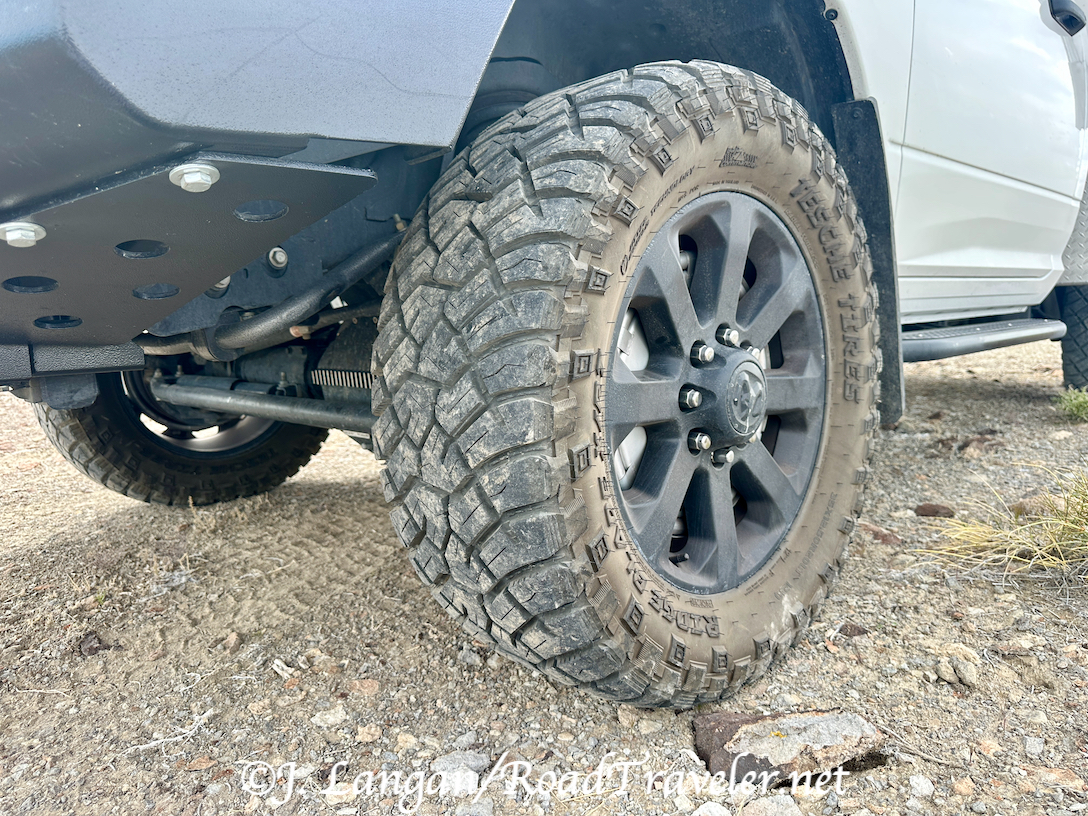
Effective tread design with a good looking sidewall on the Ridge Blade X/RT. Budget price makes them even more attractive.
Tesche Ridge Blade X/RT proved reliable and trustworthy under both my 2014 Ram crew cab and 2017 Ram regular cab flatbed camper, and I would not hesitate to run them again.

Good Value

Many major purchases boil down to the bottom line… how much do they cost. Tesche is so new to the US market that I actually delayed this review a few months because retail pricing was not yet available. 

As of August 2025, the minimum advertised price (MAP) for the 35×12.50R20 Ridge Blade X/RT I tested was $368 each. When you consider that the street price can be substantially less than MAP, they immediately become even more attractive. 

Online vendor PriorityTire.com had the 35×12.50R20 X/RT on their website for $304. Tires-Easy.com had them for $287 after adding FET (Federal excise tax), and shipping was free from both outlets. Tires-Easy.com also had the late-model heavy-duty Ram stock size, the LT275/70R18, for a mere $199 (no FET), which is much less than average for that size. 

Of course my sample size was just one set, but the four I ran exhibited no flaws or quirks, and performed as well as any mainstream brand in recent memory. Tesche is definitely a good option for the price conscious consumer. 

Tell ‘em you saw it on RoadTraveler.net!

Copyright J. Langan/RoadTraveler. All Rights Reserved

This article was also published in the Turbo Diesel Register magazine. 

Resource:

Tesche Tire USA: www.teschetire.com 


Mickey Thompson Baja Boss A/T LT295/70R18

Remote, northeast corner of Nevada, near the Idaho and Utah borders, BLM managed public land.

Mickey Thompson Baja Boss A/T LT295/70R18

During the November 2019 SEMA Show, I received insider information from a Mickey Thompson manager about a new Baja Boss A/T they had in-the-works; it was still more than one year from being announced. I’m a fan of the Benjamin Franklin quote “three may keep a secret if two of them are dead,” and I focus on being the one that is alive. 

The Baja Boss All-Terrain was introduced to automotive journalists at the virtual 2020 SEMA Show, with a press embargo date of April 5, 2021. As soon as possible I requested a set for evaluation, choosing the LT295/70R18 size. One month later I had them.

Long-term Mickey Thompson’s Baja Boss A/T evaluation started April 2021.

As you can see in my photographs this is a fairly high-void, four-rib tread pattern that Mickey Thompson calls a hybrid, AKA a commercial traction design or an aggressive all-terrain. Tires like these have been my preference for decades, offering more potential grip via siping, self-cleaning abilities, and deeper tread than more conservative all-terrains or all-seasons, while offering a quieter driving experience, and better longevity than mudders. 

Continually reducing perceived noise while improving the other attributes of these hybrid designs has been an ongoing challenge for engineers. Historically there’s been no free lunch, because much better sloppy conditions traction requires bigger tread blocks and voids, increasing road noise. Was Mickey Thompson able to achieve the impossible? Read my opinion about this below under the subheading Quiet? 

There’s much to like here.

According To Mickey Thompson

Mickey Thompson says the Baja Boss A/T blends Extreme Sidebiters® for a bold look and serious grip with an all-new silica-reinforced compound providing long-wear, all-weather performance and cut/chip resistance.

Design highlights include:

  • Large surface-area tread elements for a greater contact area
  • Shoulder scallops for an additional biting edge
  • Sound-deadening ribs for stability and a quiet ride
  • Enhanced stone ejectors to reduce debris retention
  • PowerPly XD™ with 50 percent heavier denier cord on the biased-angled third ply for protection, handling and stability
  • Rim flange protector for added wheel protection
  • 3 Peak Mountain Snowflake (3PMS) symbol certifies that all sizes 12.50 (315) and narrower are Severe Snow Service rated
  • 50,000-mile treadwear warranty
  • Increased-load LT-Metric sizing for heavy duty applications
  • Lower-load floatation sizing for half-ton, lighter trucks and SUVs
  • Several sizes approved for 12-inch and 14-inch wide wheels, including three 35X15.50 sizes 
  • A 35-inch tire approved for 17×6.5 “dually” wheels 

To all of the above I say yup, appears to be true! The substantial siping, which helps achieve the severe winter rating and increase overall grip, measures a whopping 17/32” of the total 18.5/32” tread depth. Calling the shoulder tread Extreme Sidebiters® is not public relations department hyperbole, as they are 14/32” at their deepest!

Sipes measured 17/32” deep!
Extreme Sidebiters® “for a bold look and serious grip”. Truth!
Up to a whopping 14/32” of Extreme Sidebiter® on sidewalls.

Sizes are offered for wheels from 15-24”. A standout worth noting for the DRW folks or old-schoolers like me that prefer taller, narrower rubber that fits and clears more easily, offering less rolling resistance, potentially better fuel economy, etc., is the LT255/85R17. Also know-as a 35×10.00R17, this load-index 121 size supports 3,195-pounds at 80-psi in SRW applications, and would be great under my everyday crew cab. However, the 129 load-index and 18” wheel of the LT295/70R18 was a better choice for my flatbed Hallmark Camper outfit because the shorter sidewalls are firmer and more stable for maximum loads. 

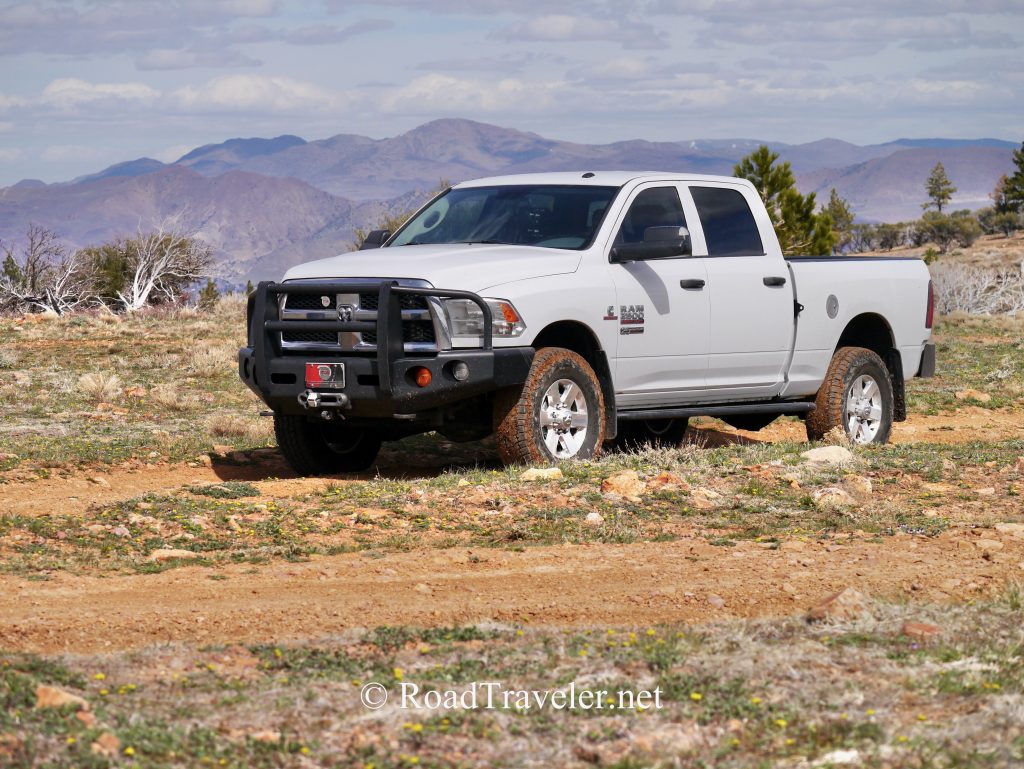
2017 Ram with Hallmark flatbed camper always works much harder than my 2014 crew cab daily driver.

Mount & Balance 

Unless a specific tire and wheel combination requires a different solution, my standard practice is to use a single plane, so-called static spin balance, as this method requires less weight and is generally sufficient. Wider tires and wheels, super aggressive treads, or just a carcass with more lateral imbalance may require dynamic balancing, which involves putting weight on both the inside and outside of the wheel. 

Many do not realize that it is often the wheel that requires the majority of the weight to balance an assembly, as modern tires are generally fantastically true. An easy way for an enthusiast to see this is by noting where wheel weight has been placed for their current and previous sets of tires. Typically the weight is needed in the same general area, pointing to imperfections in the wheel more than the tires.  

According to Mickey Thompson the LT295/70R18 size weighs 67 pounds each, and they were 104-pounds when mounted to an OEM forged aluminum wheel. Maybe you should sit down before you read how little weight was needed to static balance these beautiful meats. 

1) 3.0 ounces, right-rear

2) 3.25 ounces, right-front

3) 2.5 ounces, left-rear

4) 3.25 ounces, left-front 

Instead of putting the rims with the least weight upfront as is common at most shops, I typically put those with the most weight on the front axle. This helps confirm that they’re truly balanced, and avoids potential surprises after the first rotation. In this instance all the wheels needed just a few ounces. I rarely have tires rebalanced, as Centramatic balancers constantly perform that task. These Bosses have been run up to well above any speed limit on numerous occasions, and they have remained insanely smooth after thousands of miles and a few rotations, living on both of my Ram/Cummins trucks. 

Just a few ounces to balance the LT295/70R18E, which is continually maintained by the Centramatic balancers visible behind the wheel spokes.

Quiet!

Manufactures have been increasingly successful making beefier treads quieter, yet I routinely find that even aggressive hybrid treads that start out impressively tame get louder with wear, sometimes much louder, even with optimal rotations. (All bets are off if proper maintenance and rotations are not strictly observed.) This has not been the case with the new Baja Boss A/T, the barely audible hum has yet to increase. To my ear they are still one of the quietest, if not the quietest, tire in this category that I’ve experienced. Impressive! 

Great looking tread that is also impressively quiet for its void.

Tough Enough? Extreme Puncture Resistance?

Rugged designs help prevent punctures and stout carcass construction helps tires run cooler and support big loads, translating into better performance under heavy diesel-powered rigs that do more than run around empty. Commercial tradesman applications, farming and ranching, off-pavement adventures, and RV users can all benefit from the Boss A/T’s stout construction. Are these treads as rugged as they claim? After over 14,000 miles of hard use, my answer is a resounding yes!

Designed to do work, diesel trucks can be hard on tires. Size can a limitation, but my trucks leave the pavement often, mostly in the high-desert of the Intermountain West.

My tire evaluations typically include a photo shoot off-road at low pressures in a nearby National Forest, where I flex and abuse the tread and sidewall on some rocks. It helps gauge ruggedness and flexibility, and makes for some cool photographs. Few other than dedicated a 4WD enthusiast will ever do this, particularly in a big diesel pickup…enter the James-ness! 

Low pressure tire loading and flexing off-road.

Even rugged tire designs can be punctured, as they are essentially rubber balloons. However, I was thoroughly impressed with the flexibility and ruggedness of the Baja Boss All-Terrain’s when I subjected the tread, shoulder, and sidewalls to folding and pinching rarely seen outside of competitive rock crawling. 

After the photo shoot, they were filled with appropriate street pressure, and have continued to perform flawlessly at all speeds and under all conditions. Tire pressure has been dropped many times to improve off-payment traction, ride, and overall performance, and the tires repeatedly work like they should. 

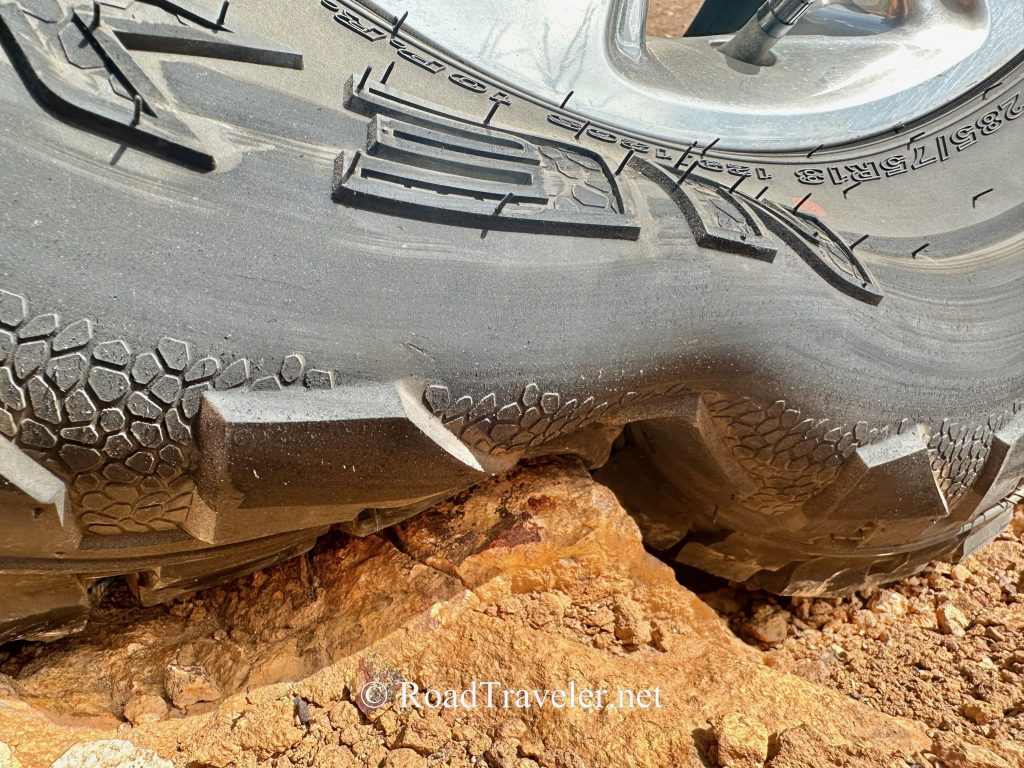
Extreme Sidebiter® folding and pinching on the right-front tire at low pressure under a 2014 Ram/Cummins crew cab.
Some tires can take considerable abuse, obviously this tire did, but there’s always risk of damage or failure.

Application Considerations

My 2017 regular cab with Hallmark flatbed camper is a full time RV, so while it’s under a constant, full-load, it accumulates miles much more slowly than a daily driver. One would think that a heavily loaded RV-application Turbo Diesel (hauling and/or pulling) would result in rapid wear, yet that is not necessarily what happens. Chronicling treadlife on many sets of tires on my diesel pickups, and those of friends and acquaintances has provided valuable perspective. 

Vehicles that see daily driving are typically subjected to repeated hard accelerations, which loads the drive tires, as well as hard stops and turning, which is harder on the fronts. These realities often contribute to reduced life compared to vehicles that see more steady, long-distance travel.

Occasional aggressive use of the skinny pedal is part of my driving style, although I am extremely soft on the brake pedal and travel slowly through most tight turns. I often obtain superior longevity and slower wear on my daily driver crew cab compared to my friends. Drivers matter. 

Longevity

The Boss All-Terrains were initially mounted on my 2014 crew cab to log miles more quickly. As shared in previous columns, I am highly critical of the brief tire reviews in most magazines that say… the tires performed well, we really like them, blah blah; which is typically the result of nothing more than a few hundred miles of use, not thousands. Occasionally there’s an update later after more miles. Thousands of miles of saddle time and evaluation should be the baseline norm, not the exception. 

The Boss A/Ts arrived at the perfect time, as I had started working away from home; the 2014 crew cab started seeing daily commuting miles, which included a run home during my lunch break for dog care. I’m often pressed for time, and there’s much firm use of the skinny pedal at the hands of the BD Throttle Sensitivity Booster (still LOVE it!). Due to these lifestyle changes the Boss A/Ts received harder use than any others treads in many years. 

Under torque-monster diesel pickups I have repeatedly observed that approximately 1/32” of tread per 2,000 miles is good or average for an aftermarket set of rubber, and substantially more miles, 2,500 or so, is above average. For comparison, a few sets of OE Firestones I’ve measured have melted though 1/32” in a mere 1,500 miles, 25% less than my 2,000 mile baseline! 

After the initial mounting and the first rotation on the 2014 crew cab, I had accumulated 6,500 miles on the Baja Boss A/Ts. Three measured 15.5/32”, and one was 15/32”, which was 2,080 mi. per 1/32” of tread depth. Considering the repeated, aggressive accelerations and fast driving this was above average; it would be just average with less spirited driving. 

The Mickey Thompsons were pulled from the crew cab and slapped onto the 2017 Ram flatbed Hallmark camper rig, where they logged another 4,500 (s)miles before their third rotation. The rears were down to 13/32”, with the front wearing little and still showing 15/32. (This is part of why we must rotate.) As the tread becomes shallower the overall accuracy of measurements increases, and it’s not uncommon for the rate-of-wear to slow after these more accurate measurements. With another 3,500 miles under the Hallmark Camper, 14,500 miles total, all were showing 13/32”. The Baja Boss A/T treads had achieved 2,600 miles per 1/32”, which is well into the above average column for many diesel pickups. 

After hours of slow 4WD, with several narrow and/or technical spots for such a big outfit, it was time to stop treating this rig like a side-by-side and make camp.

Traction Everywhere

Traction and handling has been impressive in all conditions and on all surfaces, which included much dirt, gravel, rock, some sand, rain, but unfortunately very little snow. It would’ve been nice to evaluate the severe winter rating more thoroughly. However, the western states multiyear drought has severely reduced precipitation in Northern Nevada and Northern California. 

It’s difficult to chronicle the exact number of off-pavement miles these Bosses have seen, but a conservative estimated is 1,500 (10% is huge for non-commercial applications). Opinions regarding traction are mostly subjective, variable, and relative to the platform and driver. Nevertheless, for those wanting a hybrid tire I don’t envision people wanting more grip than the Baja Boss A/T can provide. Should the opportunity present itself I’d gladly run another set of the Baja Boss, as they’ve earned a spot on my short list of favorites. 

Tell ‘em you saw it on RoadTraveler.net!

Copyright J. Langan/RoadTraveler. All Rights Reserved

James Langan

Resource: 

Mickey Thompson Tires: mickeythompsontires.com 


draft

NEXEN ATX All Terrain 10,000 Mile Review

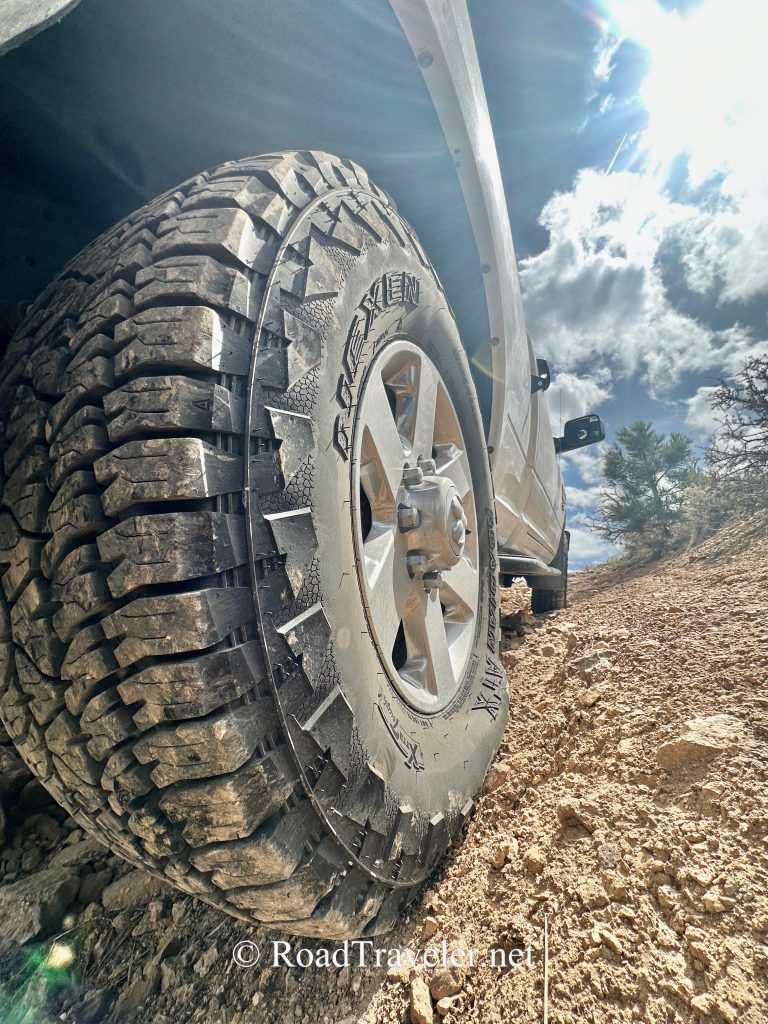
Although I have favorite tire treads and brands, I am always interested in trying something new or different. Nexen’s Roadian ATX all-terrain is a new 5-rib tread designed specifically for light- and heavy-duty pickups and full-size SUV wagons, and available in a whopping 63 sizes. Lugs on the upper sidewall/shoulder offer both traction and protection from damage, while adding a tough and aggressive look. The shoulder lugs are the same on both sides, but one side adds a cobblestone pattern between the lugs and inside the raised black letters. 

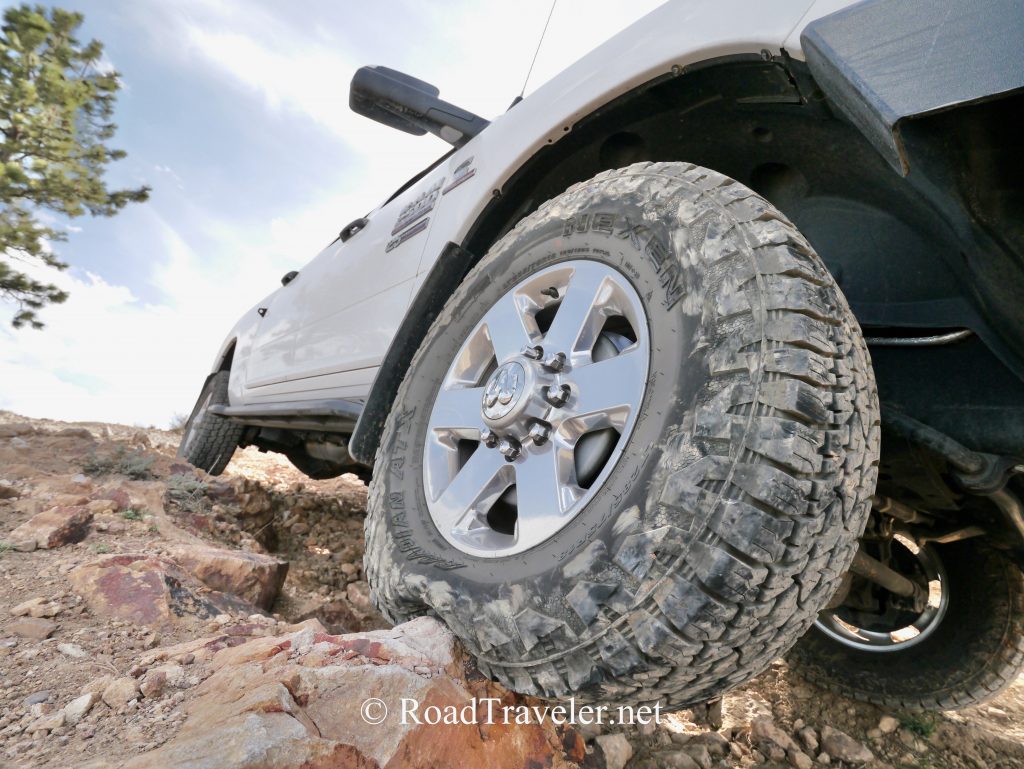
Beefy sidewall lugs put to work off-road.

All LT-sizes have 16/32” of tread depth, most have 3-ply sidewalls, as well as being 3-Peak Mountain Snowflake (3PMSF) severe winter rated, with the exception of the larger flotation offerings. Light-truck sizes have a substantial 60,000 miles tread warranty.  

Tread depth is 16/32” on all LT Sizes.

At the 2022 Overland Expo West show in Flagstaff, Arizona, a handful of journalists were treated to a sneak peek briefing introducing the new ATX, as well as the new HTX2 highway-terrain design. The HTX2 is also 3PMSF certified, which is downright impressive! The introductory press release information was embargoed until June, and in July Nexen sent a set for a longterm evaluation in a favorite size, LT285/75R18E.   

3-Ply Construction

Nexen boasts the ATX has an industry-best (for an all-terrain) reinforced 3-ply sidewall, longer tread life, and increased durability to perform well under heavier loads and at higher pressures. The increased rigidity is designed to enhance cornering stability and load support. The sidewall construction increases puncture resistance both on- and off-pavement, and the aggressively angled shoulder lugs improve durability. 

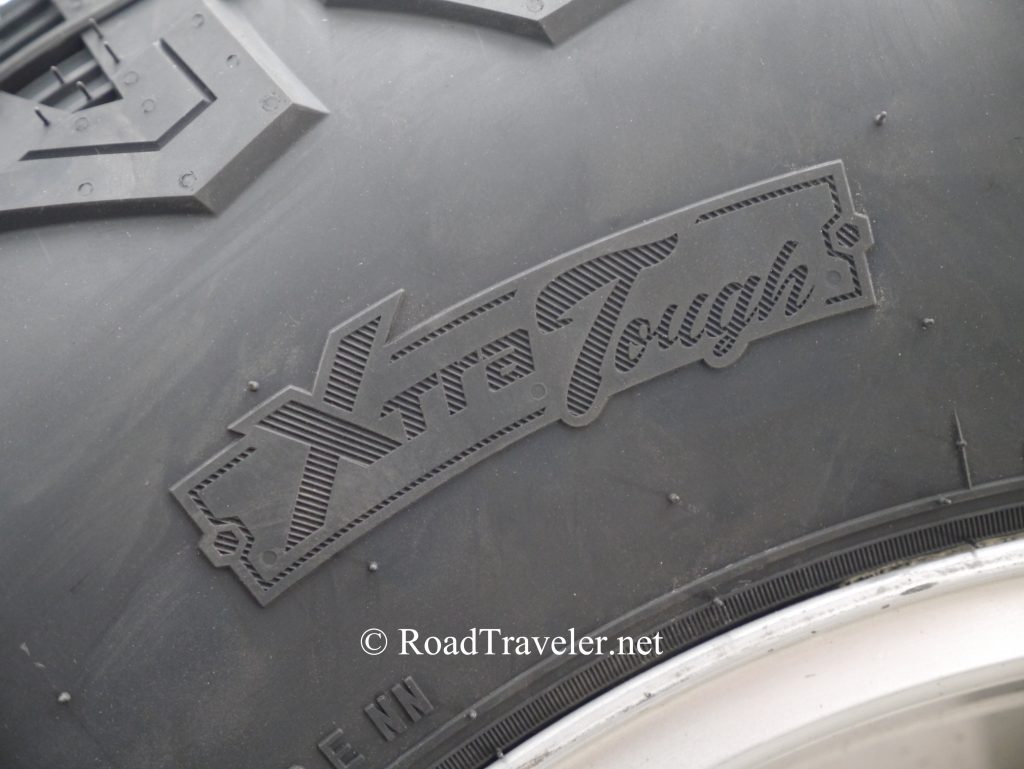
Nexen claims the sidewalls are XTRA Tough, and that’s been my experience thus far.

Siping

All-terrains and all-seasons invariably have more siping than most higher-void designs, and the ATX is no exception with two or three sipes in every tread block. Nexen’s sipe technology is designed to increase tread-to-road contact, and overall handling characteristics as they wear.  Of course the siping helps it earn the 3PMSF severe winter certification. 

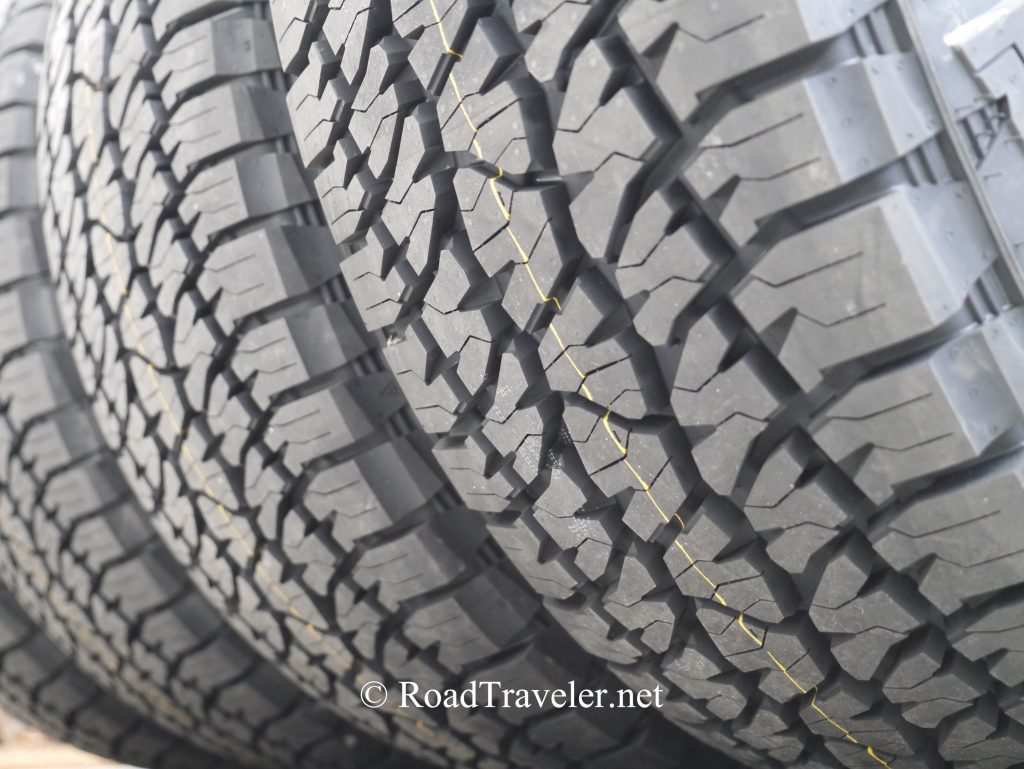
5-Rib ATX is a good looking A/T.

Mount And Balance Take One

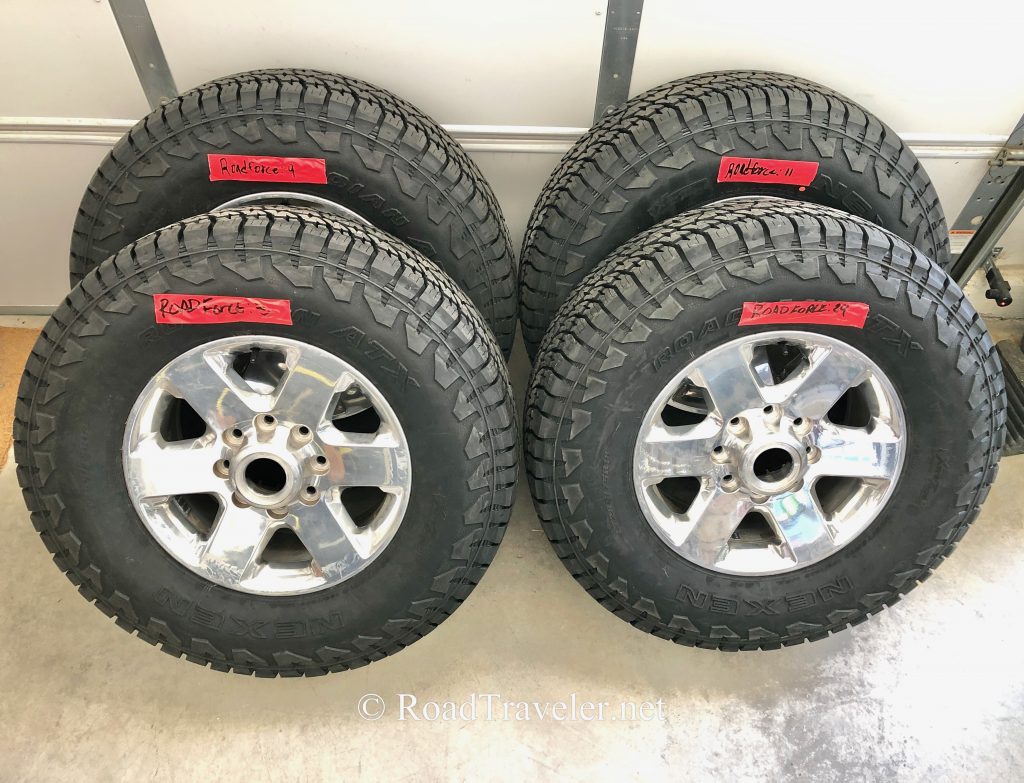
The 67-pound LT285/75R18 ATX with a load index of 129 (4,080-lb capacity each at 80 psi) were mounted and balanced on forged-aluminum OEM Ram 18-inch wheels at my local Discount Tire. They used my preferred single-plane, static balancing method, which puts less weight on the wheels. An average of only two ounces was needed to balance the set. However, zeroing on a balancing machine is not always the whole story. 

With the ATX on my 2014 crew cab for my initial test drive, even with the additional help from Centramatic Wheel Balancers, there was some roughness that I thought was a possible balance issue. Discount Tire rebalanced them using the dual-plane dynamic method, which did not add substantially more wheel weight, and lowered the perceived imbalance. 

First Rotation Issue

After 2,500 miles I performed the initial reward-cross rotation, but the ATX from the rear axle were not happy up front, with shakes and vibrations that increased with speed. 

To help diagnose the problem the suspect tires were returned to the rear axle. After placing the AAM 11.5 on jack-stands and taking all appropriate safety precautions, I let the drivetrain turn the ATX at low-idle as if on a spin balancer. The offending wiggling and hopping was obvious, shared with my contact at Nexen, and they immediately sent a replacement set. 

The positive response from Nexen was refreshing. No product is perfect and there are occasionally defective or blemished examples that sneak through (I’ve even had a bad tire from highly-respected Toyo), and because of the professional relationship I contacted the manufacturer directly.  

Are Your Wheels The Problem?

It should be noted that the wheels are often the source of balancing issues. In many cases it is the wheels, not the tires, that need most of the weight for the assembly to be balanced. Modern rubber from top manufacturers, even larger light-truck mud-terrains, are quite round and true, usually requiring little weight to roll smoothly. Just a few short decades ago light-truck radials were not nearly as good or capable, and had difficulty handling the loads and power of heavy-duty diesel pickups. 

Wheels have also become larger, so even though most are aluminum they can be much heavier than older, smaller diameter rims. These forged aluminum OEM 18-inch Ram wheels weigh 30-pounds each, where the equivalent 20-inch Ram wheels weigh 40 pounds. In contrast, the forged-aluminum Alcoa-made sixteens on my 1996 F-350 weighed only 16 pounds. 

Confident that my eighteens were not the issue, having continually used them for several sets of  tires, I had an extra set available if necessary for further diagnosis. 

Mount And Balance Take Two 

Discount Tire mounted the replacement set of LT285/75R18 Nexen ATX, and again I requested a static, single-plane balance, plus I asked them to record the road force as measured by the machine during the process (Road force is summarized below.)

As the included chart shows, this set needed little weight to balance, none in the case of tire/wheel combination #2, and the road force measurements were also low. Tire #1 had the most road force at 29, but a typical maximum allowable road force for a P-rated (passenger car) tire is 35, and much higher for a big LT tire. 

Road Force documented during the second set mount and balance.
Tire Weight oz. Road Force Location 
#1 1.25 29 Left-rear
#2 0 11 Right-rear
#3 4.75 9 Left-front
#4  1.75 3 Right-front

Road Force

Road force, or radial force variation, is a tire and wheel condition that can affect steering, traction, braking and load support. High road force will impart ride disturbances to the chassis and ultimately the driver. 

Many modern balancing machines automatically measure the road force as part of the balancing process. A road force load roller simulates the force of the road on the tire and wheel package, and measuring this force provides data on the uniformity of the combined tire and wheel assembly. 

Tires may have an area that is stiffer than the rest, which is called force variation. The combination of imperfect run-out and force variation can lead to bad vibrations. Some inconsistencies in stiffness, weight, and balance are unavoidable, but this additional metric can be quite helpful diagnosing problems or defects. 

Recently I had a set of LT295/65R20 Cooper STT PRO mudders swapped onto a different set of OEM 20-inch wheels, and noticed that the weight placement was odd on one rim. During my requested rebalance, the problem was obvious for anyone paying attention; the road force was 113! Rotating the tire 180° on the wheel corrected the issue, resulting in a road force measurement of only 29. 

Where The Rubber Meets The Road

Conventional wisdom includes putting the best tire and wheel combination (least wheel weight and/or road force) on the front axle, often the left-front position, to avoid poor drivability, handling, or driver complaints. But I am not an employee at a tire shop, I put the mounted rubber onto the axle studs myself in my shop, and am often interested in the rawest, most revealing data possible for my reviews. 

Ran smooth and quiet.

So I will frequently put what is likely the least true assembly on the front. This helps me confirm that they are truly balanced, and will roll smoothly at all speeds, even after a rotation. These Nexen ATX felt fantastically smooth and true, with no bad manners or vibrations up to 100 mph! 

After an initial 50-mile high-speed freeway flogging, I returned my garage and immediately did an X-pattern rotation to get every tire on both the front and rear axles, and both left and right sides of the truck. Another high-speed freeway road test followed, and the Roadian ATX continued to run flawlessly. 

Overall Subjective Observations, Comments & Critiques

Traction

Winter 2022–2023 ended the years-long drought cycle in Northern Nevada and nearby Northern California, producing both abnormal amounts of rain and countless days with several inches of snow. This provided many opportunities to use the Nexen ATX during on-highway 4WD conditions, in both shallow and inches-deep snow, a little ice, and pooling heavy rain that made it wise to use four-wheel-drive. 

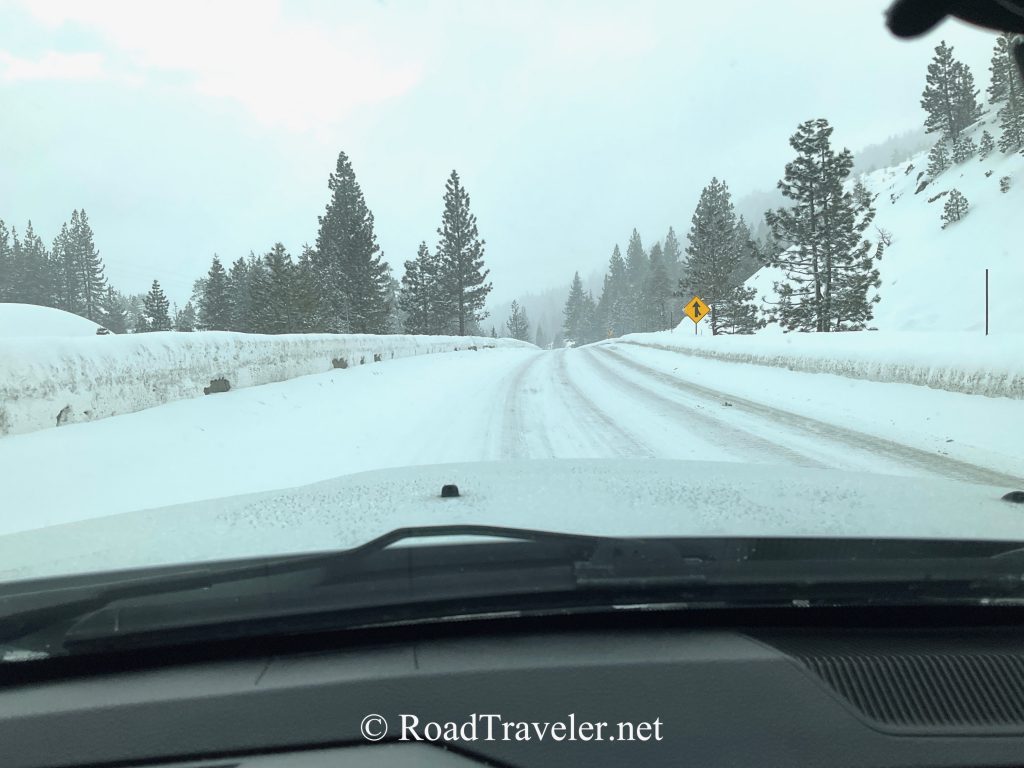
Interstate 80 near Donner Pass in Northern California. Snow traction has been good.
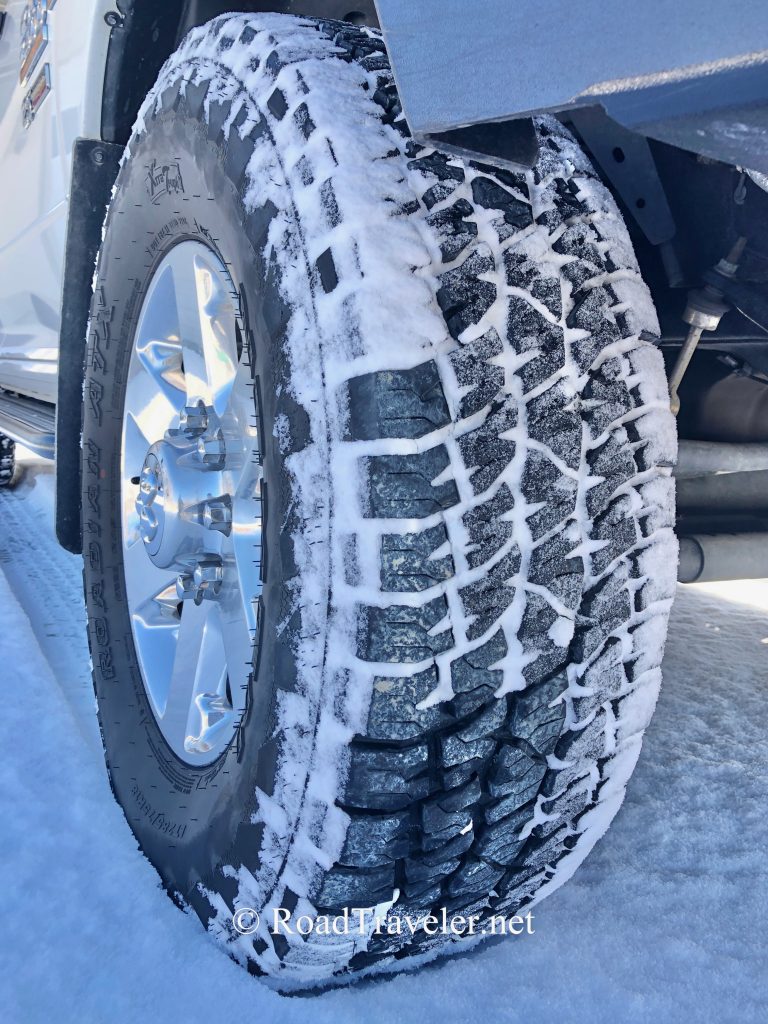
Sipes, rubber compound, and snow sticking to snow are big parts of winter traction.

Routine off-pavement driving is a part of my lifestyle, so these ATX have seen hundreds of miles of high- and low-range four-wheel-drive use, usually with the pressures lowered specifically for that purpose (30 psi in front and 20 psi in the rear). Flex, deformation, ride, and traction has been great. Cutting or chipping of the tread appears virtually nonexistent. 

Clearly these are not mud-terrains, however, they have seen shallow mud and squishy terrain several times, and have performed as well or better than any 5-rib A/T I’ve run in similar conditions. 

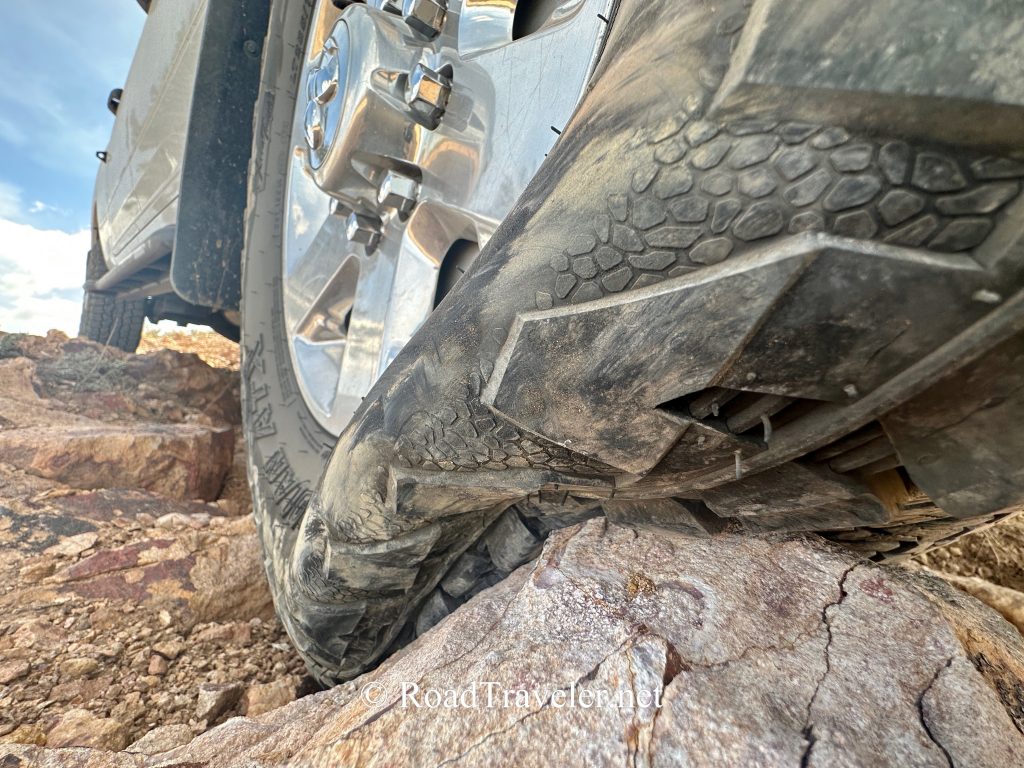
Rear axle, 20 PSI, flexing on a rock. Even a 5-rib A/T has to endure my low-pressure torture test photo shoot.
Aggressively folding the sidewall and tread with much of the truck’s weight stuffed onto the left-rear.
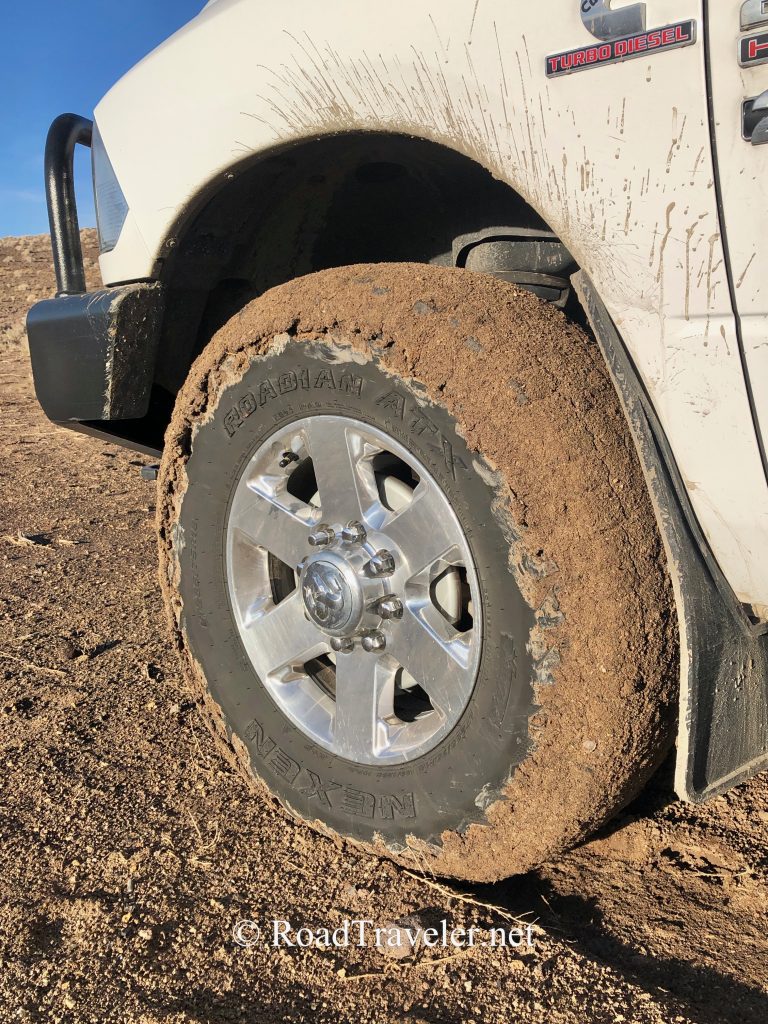
Caked and packed with wet dirt, but still performing well in challenging conditions for a 5-rib all-terrain.

Noise And Ride Quality

Perception of noise is extremely subjective, has much to do with the specific vehicle and road conditions, as well as one’s tolerance and personal experience baseline. If someone only runs a highway-terrain tread, then anything with more void is going to seem loud. Conversely, those that run a mud-terrain or a hybrid/commercial traction design, will think lower-void tires are nearly silent. With a preference for medium-void commercial traction treads, I find the ATX impressively quiet, but not only because I’m accustomed to louder rubber. When comparing the ATX to my memories of testing the similar 5-rib Cooper AT3 and later AT3 XLT just a few years ago (TDR108), the ATX seem nearly silent. 

Again comparing the ATX to the Cooper AT3 XLT, the Nexen’s 3-ply sidewalls appear to provide a firmer, more supportive and responsive driving experience compared to the 2-ply Coopers. This is a positive for heavy-duty applications because softer tires will not support big loads as well and can flex too much, generating excess heat, which is the nemesis of all tires. Balance and tracking have remained excellent, but treads can exhibit different characteristics on different chassis, and your alignment settings matter too. 

It is critical to remember that regardless of the tire you choose, it is beneficial to run appropriate pressures and avoid unnecessary over (or under) inflation for the best overall performance. An extreme example is running 80 psi on the rear axle of a pickup with zero load in the bed. Sadly, unless you’ve updated/reprogrammed your truck’s computer, Ram has made running appropriate psi problematic on the 2500 series. A cautionary yellow TPMS light will illuminate when running less than the 80 psi on the rear axle, or 60 psi up front. This is simply ridiculous, but I understand folks not wanting to run around with a glowing light on the dash. My trucks have been modified with lowered pressure thresholds to match my uses, and I use appropriate inflation for the load. 

Dirty sidewalls in the Sierra Nevada, what’s not to like?

Baselines

Longevity and wear is impacted by several variables, including: the vehicle on which the rubber is mounted, road conditions, loading (which includes one’s acceleration, braking, and turning habits), temperature, inflation pressures, and the driver. During my freelance journalism career I have tracked the wear of dozens of tires, chiefly but not exclusively on heavy-duty, 4WD diesel pickups with manual transmissions. 

With a manual, every upshift results in a loss of boost and rpm which must be regained before reaching for the next higher gear. This cycle involves the repeated loading of the drivetrain with low-rpm torque which is different than an automatic transmission. Autos will keep the boost and rpm higher when one is accelerating briskly, more horsepower and less low-rpm torque, and these differences should be obvious in the seat-of-the-pants of experienced and attentive enthusiasts. So if all things are equal, which they rarely are, I argue that a manual transmission can wear tires more quickly than an auto. 

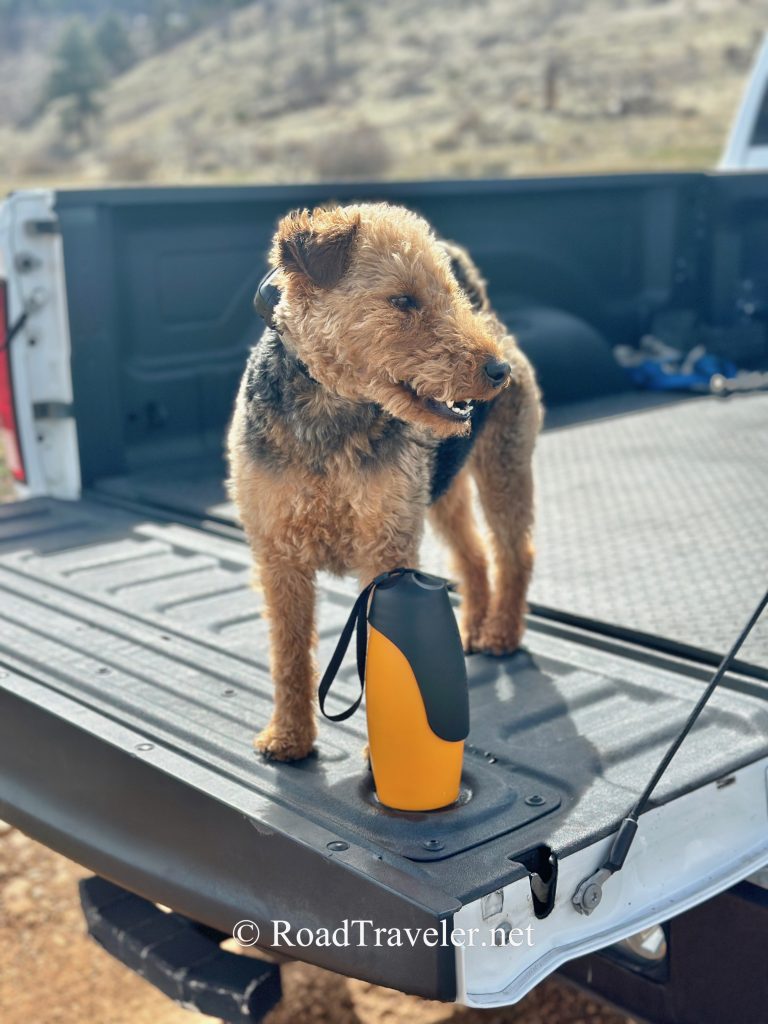
Elsie our Welsh Terrier is my helper during most automotive projects, and a great rodent hunter too!

Wear Data

After 9,600 miles and two rotations, the Nexen Roadian ATX are 4.5/32” shallower than their original 16/32”, which is 2,133 miles per 1/32” of tread depth. This is good and comparable to quality aftermarket rubber from several manufacturers. Considering the test platform, duty-cycle, and other variables, my opinion is that substantially under 2,000 miles per 1/32” is substandard, and over 2,000 miles is good. 

It’s noteworthy that there has not been a substantial rate-of-wear disparity on the front and rear axles. The torque-loading of the drive axle, especially under a diesel, often results in more rapid drive-tire wear. This is not just a truck thing, as I have documented this on two personally-owned manual transmission Volkswagen TDI (diesel) front-wheel-drive cars. Both TDIs wore the fronts much more quickly than the rears due to the low-end torque. Designs that do not show substantially more drive-tire wear between rotations often indicates the potential for superior longevity. 

Really Like ‘Em

While I was skeptical about the Nexen brand before trying the ATX, sometimes it’s good to step out of one’s comfort zone. Even with my bias for medium-void rubber, I have been impressed with the Roadian ATX. Hopefully they make a hybrid/commercial traction design soon, which would fill a gap in their current lineup. I’d be chomping at the bit to try them. 

James Langan

Instagram: @RoadTraveler 

YouTube: RoadTravelerNet

Resource: 

Nexen Tire: nexentireusa.com